Editor's Note: While trying to reclaim a little bit of sanity as my post, "It's my Birthday, So you Better Read This" was maliciously shadow-banned by the usual platforms (probably just a little too honest), some details concerning the mysterious 10-hour CME shutdown Thanksgiving evening into Black Friday were emerging from a variety of sources. Nothing you read below has been verified, since the principal parties aren't about to spill the beans on what actually happened, but, speculation points toward a major event that has been tucked away for safe keeping by the financial deep state. - Fearless Rick
The 10-hour shutdown of the CME, the world's major derivatives platform, late on the night of Thanksgiving and extending into Black Friday morning in the U.S., continues to raise eyebrows, though it is almost universally accepted that the cause was not "cooling issues" as the official story wants the world to believe.
The most likely cause was a large purchase of physical silver, the buyer (or buyers) standing for delivery and the contract seller (ostensibly a short seller) failing to deliver
At about the 5:15 mark of the video below, Mario Innecco begins to talk about 34 million ounces of silver (6,800 contracts) being bought by supposed Mideast Sovereign Wealth Funds or cental banks. That's about $1,972 billion worth of silver that the customer was standing for delivery on and maybe did or did not receive, but that's just the tip of the silver iceberg that is threatening the Western economies and confidence in the institutions of the CME, COMEX, Globex, the LBMA, indeed, the pillars of derivative trading, the the main suppressors of gold and silver prices for the past 50 years.
Vince Lanci's analysis via the Wednesday, Decemebr 3, Arcadia Economics' Money Morning Report "SHOCKING SILVER NEWS: JP Morgan Transfers 13.4 Million Ounces To Eligible During CME Shutdown" provides further analysis and speculation to what happened on Thanksgiving evening and Black Friday morning at the CME. Lanci's reporting also verifies JP Morgan moving 13.4 million ounces from registered (available for delivery) to eligible (customer owned, not available for delivery).
Taking the gist of the two video postings together, a story begins to emerge. Of course, nothing is verified. It is still speculation, but, perhaps, just prior to the shutdown, the buyer of 6,800 silver contracts (5,000 ounces each) stood for delivery. Frantic, panicked, whoever wrote the contracts (could be one entity, or many) informed the CME that they didn't have the silver to satisfy delivery or didn't want to part with the metal.
It would appear that the writer of the contracts in question was most likely one bullion bank, possible the COMEX London vaults, a large broker-dealer or a combination of such. In an event that would shatter confidence - failing to deliver on nearly $2 billion in silver - CME officials decided to shut down the entire exchange, effectively covering the tracks of the silver trade (or non-trade).
During the shutdown, as Lanci assiduously points out, negotiations likely took place, an agreement was reached, and that would partially explain JP Morgan's action, essentially, covering part of the purchase by reclassifying 13.4 million ounces. For illustration purposes, suppose JP Morgan was made part of the deal, instructed to cover part of the purchase via accounting. In essence, the 13.4 million ounces that were available prior to the shutdown became the property of the buyer, for delivery at some agreed-upon date. (BOLO for planes laden with 1,000-ounce silver bars leaving New York and headed for Dubai)
Digging a little deeper, the lie of the "cooling issue" story and the truth about what really happened begins to crystallize. About a week before Thanksgiving, President Trump welcomed Saudi Prince, Mohammed bin Salman, to the White House for extensive meetings attempting to repair the badly frayed U.S.-Saudi relationship. Desperate to make amends, Trump, who, as everybody knows, is the most fabulous, greatest-ever deal-maker in the history of the known universe, gave bin Salman just about anything and everything he wanted, including the purchase of F-35 fighter jets wihtout the caveat of normalization of relations between the Kingdom of Saud and Israel.
The Saudis, being not the least misinformed concerning geopolitics and money, might have decided that silver at $57 to $58 per ounce might offer an opportunity to trip up the United States and cripple the corrupt Western derivative markets, while at the same time grabbing hold of a valuable asset that is likely going to triple in value over the next 12-18 months.
After all, at the Bank of Bullion in Dubai, on their FAQs page, the answer to the question:
What is the minimum Quantity of gold and other precious metals I can buy from Bank of Bullion?
is 1 Oz of Gold, Platinum or Palladium. 10 Oz of Silver
For reference, one ounce of gold is roughly $4,250. 10 ounces of silver is only about $570.00. Why not 75, 80, or 100 ounces of silver, which would be roughly equivalent to the minimum capital limit on gold?
This aligns with India's recent directive to allow citizens and businesses to borrow against their gold and silver, their minimums being 1 Kilogram of gold or 10 Kilograms of silver.
The world order is being turned upside-down and it may take just one big trade to completely flip the scales.
Markets are open for Friday's trading.
Good luck.
At the Close, Thursday, November 4, 2025:
Dow: 47,850.94, -31.96 (-0.07%)
NASDAQ: 23,505.14, +51.04 (+0.22%)
S&P 500: 6,857.12, +7.40 (+0.11%)
NYSE Composite: 21,835.79, +30.39 (+0.14%)
Hey, today's my birthday, so I might go off the rails a bit here.
One of the biggest problems in the world today is that of political and economic leadership failing to acknowledge their own failures.
Manifested in various schemes and sub-routines, like sending a real estate developer and your son-in-law to negotiate peace with Russia over Ukraine, or claiming covid vaccines are safe and effective while people collapse right after receiving the "jab", the willful blindness of people in leadership positions is stunning.
One activity that constantly comes into perspective is the decades-long suppression of gold and silver by minions in the COMEX-LBMA-ESF cartel. These delusional folks actually believe they are doing some good with their naked shorts, spoofing, and assorted market manipulations by sending the price of silver a buck or two lower, or holding the price of gold right at some pre-determined level, satisfying their need for control and influence.
All they're actually doing is delaying the inevitable collapse of fiat currencies and the return of honest money devoid of counter-party risk.
Europeans are particularly adept at self-deception and delusion. Many heads of state within the EU - at least the important ones, France and Germany - must have to wake up every morning and convince themselves that Russia is about to invade Europe and that Ukraine is effectively holding them back. Macron in France and Merz in Germany are primary exemplars of delusional behavior. The U.S. has developed its own brand of pseudo-realism, thanks in part to the fall of journalistic standards, large swaths of heavily-controlled and coerced populations, and just plain stupidity.
It began with Joe Biden and Nancy Pelosi, in a manner that was equally hilarious and disturbing at the same time. Biden's famous wide-eyes whispered threats and Pelosi's aimless ranting became standard fare to feed to the masses. Mostly, their incoherent ramblings were shucked off as just drivel, but they kept at it until it worked on the whole psyche of America. Russia was evil. Trump was a criminal. Climate change. The green new deal. Open borders. All good on the suface while America was rotting at its core.
Then along came Trump 2.0 who promised to release the Epstein files and bring the pedophiles and human traffickers to justice, to end the Ukraine conflict in 24 hours, to deport 20, no 40 million illegals, to bring down grocery prices, to stop the endless wars and declare peace, and, boldly Make America Great Again (MAGA). Now, after being duly elected and in office for almost a year, Mr. Trump, presumably the most braggadocios president ever to grace the Oval Office with his magnificent presence, has, in his mind, ended 8, 9, or 12 wars, raised "trillions" in tariffs, and made deals with every country on the planet, each one favorable to U.S. interests.
Meanwhile, right before the president's eyes, we're bombing fishing boats in the Caribbean, running what looks like a $2 trillion deficit for fiscal 2026, sending more money and arms to Ukraine, and the American dream has become unattainable to all but maybe the top 10% of earners in the United States, and even some of them are struggling to make ends meet.
Trump has redefined the limits of self-delusion. He may be outdone only by the EU's Ursula von der Leyen, but probably not. Credit is due for the president shutting down the border crossings, fighting against all the LGBTQ+ ideology, and a good number of other efforts, but, walking back from DOGE was an epic fail. Ukraine is also a loser. The economy stinks for most people, but the president keeps telling us the stock market is at all-time highs, as if that makes the people who own stocks marginally or not at all happy.
Trump's tariffs are bringing in extra revenue, setting a record for October, at $31.4 billion. But, thanks to Trump and the congress, the Big Beautiful Bill passed back in July has so far produced a $284 billion deficit and that's when the government was supposedly shut down. And, that's just the first month of the fiscal year. Can't wait to see how this all goes once Trump has his own guy or gal in at the Fed and pushes him or her to cut the federal funds rate to two percent, or one, or lower. $7 bananas and $85,000 cars aren't exactly what one might classify as "great."
Tariff revenue barely makes a dent in the $7 trillion the government plans to spend. It might come close to paying some of the interest on the ever-expanding debt, but at what cost? A middle class that can't afford a mortgage, a new car or dinner at a restaurant? Foreign nations aren't buying U.S. debt anymore, or, at least not as much as they used to. Seriously, the U.S. government issues far too much debt and then they overspend anyway, so what's the point? Maybe Trump can boast about how much money the U.S. tariffs are brining in, but how does that help regular folks? More SNAP, Section 8 housing, and $2,000 stimulus checks? No thank you.
Just about everybody in Washington is either delusional, crooked, or both.
Trump's Wall Street buddies are happy.
I suppose stockholders are happy.
But, those people at the supermarkets, they don't look very happy.
So, we're still awaiting Trump's promised "golden age" while many of the MAGA supporters have left the club, this writer included. It appears that in Trump's America, Wall Street does fine, billionaires buy more yatchs and condos, but for the regular Joes and Janes, meh. Just, meh. We just don't get it.
I may have strayed a bit from what I originally intended to say, but my bottom line is this: when you get upset that the crooks in the COMEX sent the price of silver down another buck-and-a-half overnight (when you know it should be going up), or when you gasp at two strip steaks for $34, or experience some other lunacy that is the product of the age of delusion, it's OK to blurt out, "God, I really hate these people!”
Really, it is. God may or may not be listening, but somebody within earshot might be, and you might hear, "Yeah, me too."
Happy Birthday to ME.
-- Fearless Rick
At The Close, Wednesday, December 3, 2025:
Dow: 47,882.90, +408.44 (+0.86%)
NASDAQ: 23,454.09, +40.42 (+0.17%)
S&P 500: 6,849.72, +20.35 (+0.30%)
NYSE Composite: 21,805.41, +154.92 (+0.72%)
With the holiday season in full swing, Wall Street made up for lost ground on Tuesday, sending all the indices higher on promises for no peace and ill will toward other countries, which kind of goes against the biblical rendering, "peace on earth, good will toward men."
Most of the world is at Defcon 1 or 2 by now, getting ready for World War III, which Europe, the UK, and the United States appear to be intent on starting.
Meanwhile, Steve Witcoff and President Trump's son in-law, Jared Kushner, have traveled to Moscow, negotiating terms of their 18-28 point peace plan with Russian president Putin. Word has it that negotiations went deep into the evening, past midnight, and that the talks were "constructive", which is a media dog whistle for "we got nothing." This is the same messaging that was issued over the weekend from the meetings in Miami with officials from Ukraine. The whole "peace deal" is just plain bunk, made for media spin. The war in Ukraine will end when Russia completely wipes out the Ukraine's armed forces, which is happening on a continuous basis. Figure by June or sooner, Russia will own all of Ukraine east of the Dnieper River.
In the meantime, NATO and friends have been targeting oil tankers which are supposedly carrying Russian oil, a big no-no from an American perspective but also not something of which Mr. Putin is very fond. Russian pipelines and energy facilities have been under heavy assault the past few months. This is apparently how the West negotiates. With explosions and targeting Russia's energy infrastructure. That should work out just fine for the comedy team of Witkoff and Kushner.
Also, sooner or later, the U.S. is going to invade Venezuela, for their oil, not because they traffic drugs, as we've been told. These people are insane.
So, stocks should go up because, um, America, yeah!
Elsewhere, whether you believe last Friday's CME outage was real or a devious ploy to hide severe stress in the silver market, the usual suspects were back at work, sending the price of silver on the globex down from $59 to $57.53 in a matter of an hour right around midnight ET. Silver is gaining as the sun rises over Wall Street, trading just above $58.
Around the same time, gold received similar treatment. At around 7:30 am ET, gold was trading just above $4,200 per ounce.
The continuing suppression effort by the LBMA, CME, COMEX underlings, Exchange Stabilization Fund (ESF), and/or anybody else, has become something of a running joke to serious investors. Everybody knows what they're doing, and everybody also knows that the jig is just about up. The rising price of gold and silver at various rates of change in different countries is not that gold and silver are becoming more valuable, it's that the currencies used to purchase them are losing value. Yen, yuan, euros, dollars, pounds are basically becoming toilet paper.
Gold and silver endure. Get some soon, because today's prices - even at or near all-time highs - are going to look ridiculously cheap in the not-so-distant future as the entire facade of Western prosperity and productivity meets the reality of the emerging BRICS nations. Western economies are deeply in debt and unable to escape the clutches of inflation and boom-bust cycles. The stock market cannot go up indefinitely, though it appears that the money behind the gains of the last five years, at least, aren't yet satisfied.
There's money to be made in stocks. That's for certain. How much is a matter of investing acumen, timing, and capital willing to be employed. With the Fed all but certain to cut the federal funds target rate by 0.25% next Wednesday, stocks should see solid gains between now and then and probably beyond. There just isn't any kind of anchor in the system. Nothing seems to shake the confidence level of the confidence men or the back room antics of the string-pullers.
Nobody with a functioning brain dares short this market, so the upward slope is practically guaranteed. What might it take for the markets to correct? Who knows? Wall Street manages to spin every bit of news - good or bad - into a positive for stock ownership.
So, why worry?
Maybe because the narrative doesn't quite match reality. AI hasn't produced any significant scientific breakthroughs, any significant increase in knowledge or productivity, or any other tangible result beyond writing pretty good high school and college term papers and enhanced porn. Big tech companies are investing hundreds of billions of dollars on a technology that is unlikely to ever produce positive ROI.
Then, there's bitcoin and the crypto con. Since November 22, bitcoin has gained from a low of $84,000 to over $93,000 this morning. That's all well and good and the crypto bros are once again touting "new highs, soon, real soon," and other rubbish. Bitcoin and most of the other popular copies are still 25-30% down from recent all-time highs. For all intents and purposes, crypto remains in a bear market.
What's even more concerning about bitcoin and crypto in general is that it serves no useful purpose other than providing a means to soak up excess liquidity and fund illegal activities. It's not a store of value or a viable means of exchange. Bitcoin and all the other "coins" are just speculations. Eventually, like fiat currencies, they will be worth little if anything.
Not that it matters much, but, this morning, the November ADP employment report registered a loss of 32,000 jobs in the month, missing expectations of +40,000 by a mile and well below the +47,000 upwardly-revised from October.
According to Dr. Nela Richardson, Chief Economist, ADP:
Hiring has been choppy of late as employers weather cautious consumers and an uncertain macroeconomic environment. And while November's slowdown was broad-based, it was led by a pullback among small businesses.
Thank you, Captain Obvious.
Normally, the ADP report presages the BLS Non-farm Payroll report issued the first Friday of each month, but, according to the ever-efficient federal government bureaucrats, the November report has been delayed until December 16 and will include partial data from October. Well, isn't that special? After the FOMC meeting (December 9-10).
Moving on, Money Daily did a little investigating on Trump Accounts after Michael Dell and his wife pledged to put $250 into 25 million Trump Accounts, for a total contribution of $6.25 billion. Americans have about 3.6 million births a year, so over four years time, that amounts to 14.4 million. In order for the Dells to reach the $6.25 billion target, the US birth rate would have to pretty much double, and nearly every parent of a child born during the eligibility period would have to open a Trump Account.
As usual, the hype overshadows the reality.
Q: Should you open a Trump Account if you have a baby born on or after Jan. 1, 2025, through Dec. 31, 2028?
A: Not until you read the 44-page notice the IRS has prepared. Nobody can open a Trump account until sometime next year. Contributions to Trump Accounts cannot be made before July 4, 2026. The IRS is still in the process of creating Form 4547, which has to be filed when opening a Trump Account.
The federal government will supposedly make a contribution to eligible Trump Accounts in the amount of $1000. It's free money, but the beneficiary of the account - your kid - can't touch it until they're 18. The money has to go into a bank or other non-bank custodian trustee acount and be invested in either mutual funds or ETFs. The contribution limits are $5,000 a year. After the beneficiary turns 18, any distributions are taxed as ordinary income.
Here's a thought: How about, instead of dealing with the government, banks, taxes, and the stock market, you buy $1000 worth of gold, silver, baseball cards, and comic books, store them in a safe place (like an actual "safe") and don't tell anybody? Then, you can add to it whenever you please, spend it whenever you like, do whatever you want with it. If that sounds easier and more desirable, it's because it is.
Some people may have a problem with this latest vote-buying-stock-market-pumping scheme. The $1,000 that will be donated by the government to each account is taxpayer money, or, rather, about 60% taxpayer money and about 40% borrowed from the Federal Reserve. Did anybody ask American taxpayers if they wanted their money spent this way? No.
Beyond that, the money, including any contributions made by parents, grandparents, or anybody else, goes into the system, is tracked, then eventually taxed. As usual, the government has plenty of hooks into the whole thing and is tied to Wall Street investment banks who will be getting a nice boost from these accounts which can't be touched for 18 years. Talk about building a floor under the stock market!
Here's a prediction. No more than 5 million Trump Accounts will be created, and the money invested in them will vanish, just like in the famous South Park episode.
Stock futures are pointing to a positive open. Go get 'em.
At the Close, Tuesday, December 2, 2025:
Dow: 47,474.46, +185.13 (+0.39%)
NASDAQ: 23,413.67, +137.75 (+0.59%)
S&P 500: 6,829.37, +16.74 (+0.25%)
NYSE Composite: 21,650.48, -15.98 (-0.07%)
As stocks entered the home stretch, they began to fade with the finish line in sight... story to be continued.
There are just 20 trading days left in 2025, and all indications suggest that it will go down as a solid, though unspectacular, year for equities. The Dow is up 11%; S&P up 16% and the NASDAQ ahead by 20% as of Monday's close. Those are pretty good returns, if they hold, which is why many fund managers have already closed their books and will resume buying or switching out in January. Life is good spending December in the Bahamas or Caymans.
The Dow took the worst of Monday's selloff, losing nearly one percent. As usual, it could have been worse... or better. The major indices erased most of the steep, early losses by midday, but all faded into the close. This is the kind of volatility that can be expected in an uncertain environment. Thank the government for that, at least partially, by delaying the usual economic reports - NFP and GDP in particular - and blaming their own shutdown for the lack of data.
Silver, after Friday's big run, cooled off a bit on Monday, especially after Arcadia Economics' Chris Marcus posted a note about it hitting 59 (and keeping going) in the futures market. Silver lost a bit of its mojo, but that's probably to be expected from an asset that's up 99% year-to-date. Silver won't stop rising, though there may be a few pullbacks, stutters, and surprises on its way to triple digits, where it belongs. Considering that the price of an ounce of silver would be $128 if the gold:silver ratio were a realistic 25:1 and even higher by historical standards of anywhere from 8:1 to 16:1.
Silver will be triple digits within 24 months, possibly within six.
Meanwhile, be on the lookout for the Santa Claus Rally, which usually occurs in the week between Christmas and New Year. Considering current valuations and the levels of naked greed and avarice on Wall Street, it may kick off sooner. Then again, December remains a great time to lock in gains and impress your friends.
Keep your stop losses close.
At the Close, Monday, December 1, 2025:
Dow: 47,289.33, -427.09 (-0.90%)
NASDAQ: 23,275.92, -89.76 (-0.38%)
S&P 500: 6,812.63, -36.46 (-0.53%)
NYSE Composite: 21,666.47, -158.21 (-0.72%)
Without a doubt, though the mainstream media won't readily admit it, the biggest story of the week was the shutdown of the CME and COMEX late on Thanksgiving night (Thursday) and into Friday morning.
With that in mind, the usual sections in this week's WEEKEND WRAP will be shortened versions, focusing on the big story in gold and silver. Detail can be found in the Precious Metals section below.
Stocks
Stocks had one of the best weeks of the year, as the major averages advanced every day of the holiday-shortened week. Adding in the Friday prior, the majors have finished on the upside five consecutive sessions.
Treasury Yield Curve Rates
Date
1 Mo
1.5 mo
2 Mo
3 Mo
4 Mo
6 Mo
1 Yr
10/24/2025
4.11
4.06
4.02
3.93
3.89
3.76
3.58
10/31/2025
4.06
4.02
4.04
3.89
3.87
3.79
3.70
11/07/2025
4.01
3.96
3.98
3.92
3.83
3.76
3.63
11/14/2025
4.04
4.02
4.01
3.95
3.88
3.80
3.70
11/21/2025
4.03
4.01
4.00
3.90
3.84
3.75
3.62
11/28/2025
4.05
3.97
3.99
3.88
3.86
3.74
3.61
Date
2 Yr
3 Yr
5 Yr
7 Yr
10 Yr
20 Yr
30 Yr
10/24/2025
3.48
3.49
3.61
3.79
4.02
4.56
4.59
10/31/2025
3.60
3.60
3.71
3.89
4.11
4.65
4.67
11/07/2025
3.55
3.57
3.67
3.87
4.11
4.68
4.70
11/14/2025
3.62
3.61
3.74
3.92
4.14
4.73
4.74
11/21/2025
3.51
3.50
3.62
3.82
4.06
4.67
4.71
11/28/2025
3.47
3.49
3.59
3.78
4.02
4.62
4.67
Spreads remain wide. Fed speakers are in "quiet mode" prior to the next FOMC meeting, so there will be no Fed speakers in the week ahead. Otherwise, the treasury market is functioning, though there is crowding out due to excessive issuance by the U.S. Treasury, with more than $1 trillion in refunding ongoing.
WTI crude closed out the week at $58.48, which was very close to the high of the week on Friday, though numbers were skewed everywhere due to the "cooling" issue with the CME's computer banks. WTI hit a low of $57.23 on the Tuesday, November 25th, and continues to manifest weakness due to dwindling demand and a glut on world markets, the laughable sanctions against Russia's largest crude producers, Lukoil and Rosneft, not withstanding.
The U.S. national average for gas at the pump fell to $2.98, the lowest price in nearly five years, according to Gasbuddy.com. Gas prices should continue to decline over the near term and through winter.
California remains the highest in the lower 48 states, at $4.55 per gallon, down 11 cents over the past two weeks, followed by Washington ($4.15), the two constituting the $4+ club. Oregon ($3.75), was down two cents. The lowest prices remain in the Southeast, with Oklahoma checking in near the lowest price in about a year, $2.45. Louisiana ($2.50) and Mississippi ($2.51) were next. Texas ($2.52) and Arkansas ($2.54) follow. The remaining Southeast states are all below $2.80 with the exception of Florida ($3.01) down 10 cents from last week.
In the Northeast, prices remained elevated. Only New Hampshire ($2.94), Delaware ($2.98) and Maryland ($2.99) posted under $3.00, with Pennsylvania ($3.22) easily the highest. Vermont ($3.11) and New York ($3.12) were the next.
In the midwest region, where the price relief was felt the most, Illinois ($3.13) was the only state above $3.00. At the low end were Colorado ($2.49) and Kentucky ($2.61).
Sub-$3.00 gas was reported in 31 states, a gain of three from last week and five over the past two weeks.
Bitcoin
This week: $91,709.19
Last week: $87,373.34
2 weeks ago: $95,387.89
6 months ago: $104,494.50
One year ago: $96,490.37
Five years ago: $19,156.46
Bitcoin has recovered from a low of around $81,000 on November 22. It remains 26% below its all-time high of October 7 ($124.310.60).
What happened late-night on Thanksgiving (Thursday, November 27) was nothing less than pure panic in international markets. While the official story of the nearly 12-hour "dark" period of the Chicago Mercantile Exchange (CME), which includes COMEX trading, halted all futures and options trading due to a cooling failure at the CyrusOne CHI1 data center in Chicago. The technical issue forced the CME to shut down its Globex electronic trading platform, crucial for price discovery in commodities such as wheat, corn, oil, gold, silver, and U.S. equity futures.
The outage affected trading in global markets, leading to volatility and disruptions in pricing. Traders faced challenges as they reverted to traditional methods of contacting brokers due to the lack of live trading. Following the shutdown, there was a notable surge in silver prices, which increased by more than $3.00.
CyrusOne's engineering teams were actively working to restore full cooling capacity at the affected data center throughout the night and early morning. CME officials indicated that they were working to stabilize the data center and provided updates on the resumption of trading. Finally, at 8:00 am ET, CME announced that trading on its platform would resume at 8:30 am ET, in time for stock futures to price before the cash market open.
That was the official story from market operators, which almost nobody believes. The reason for the CME "pulling the plug" on its entire network run the gamut from wild conspiracy theories to more mundane explanations, such as the sheer volume of paper contracts - which are usually magnitudes higher than actual commodities available for delivery, especially gold and silver - overwhelmed the system.
1) The failure was technical. CMEs software or hardware malfunctioned. Lanci points out that the last two CME outages - in 2014 and 2019 - were at a time when they had no competition, but notes that the global condition has changed and the Shanghai Futures Exchange and the Shanghai Gold Exchange now compete with the CME "to define the price the world references." The outage exposes CME vulnerability.
2) Lanci observed the speculation of some traders and analysts, that at the time of the outage, silver was at an all-time high, platinum was surging and China had, on that day, launched its platinum contract. The concerns of traders put on display the erosion of confidence in Western systems as opposed to the emergence of China's platforms.
3) Lanci then looked at actual silver and gold trading during the outage, which included spiking prices at highs just as the platform shut down, then, in the "darkness" a drop in both prices, due to a lack of corresponding prices, or, counterparty affirmation. The fragmentation in these markets points up the need for comparison pricing platforms to be in continuous operation, lest price discovery becomes a one-sided affair, which does not work for global pricing.
Lanci also pointed out that the Thanksgiving event should not have happened, relating that CME has built data centers with multiple levels of redundancy and fail-safes.
Elijah K. Johnson at Miles Franklin's Liberty and Finance interviewed analyst Mario Innecco, who pointed out various efforts in Dubai, India, South Korea and elsewhere to bring silver into the global monetary universe. Central banks have begun buying silver alongside gold. Innecco cites examples from November 1979 to January 1980 when silver tripled, and 2004-05 when silver experienced $5 gains in single sessions.
Innecco called the shutdown "suspicious," and thought that CME not having backups was "far-fetched", especially on a relatively quiet post-holiday trading session. He believes premiums will go higher on Monday and thereafter, advising small investors to focus on pre-1965 "junk" silver and American Silver Eagles (ASE). He also believes silver will provide more liquidity than gold in day-to-day transactions. He called the recent moves in silver "historic", citing the bimetallic period in the U.S. prior to 1873 and the fact that silver was used as money as lately as the 1960s.
Morgan cited Nobody Special Finance and Bob Coleman as sources backing the rumor that none other than Paul Tudor Jones made multiple market moves in silver just prior to the CME shutdown and may have been instrumental in the events of Thanksgiving evening and Friday morning.
Morgan said the story is that "paper price discovery broke" and that silver is entering what he has long-called the "recognition phase, when the world finally realizes that the metal is industrial, indispensable, and monetarily irreplaceable." Nearing the end of his report, Morgan pointed out, "above all, understand, this is not a spike but a signal. You're watching the early stages of a historic transition, the slow, grinding collapse of paper promises and the rise of real assets that cannot be printed, erased or defaulted upon. Silver just sent its warning shot. Now the real game begins."
Mike Maloney of goldsilver.com does not believe that the shutdown was necessarily tied to silver in particular, but he doesn't rule it out, saying such speculation is reasonable considering the market conditions. In his video presentation, Maloney offers examples of posts on the social platform X, which point up what othe analysts have expressed, that regardless of the cause, the system broke.
William Middlekoop, who notably has signaled a global monetary reset is imminent, posted: "'A cooling issue' Translation: We need to cool off the silver market, reposition, to avoid silver exploding higher. Markets will re-open (gold and silver) when we know we can hammer prices lower..."
The X personality known as "Ben Rickert" (played by Brad Pitt in the film, "The Big Short") (@Ben_Rickert) was highlighted in Maloney's piece. Rickert's post included the ominous message: "Money is unraveling. Confidence is eroding. Price signals are returning. And silver - the underestimated monetary metal - is leading the revolt. The bull run didn't pause. The exchange did. And that tells you everything you need to know about where this cycle is going."
Due to temporal limitations - it's now 2:30 on Sunday afternoon - it would be impossible to cite all the experts, so Money Daily will hopefully be featuring opinions from the likes of Luke Gromen, Ronald Stoeferle, Andy Schectman, Andrew Maguire, Craig Hemke, and others as events unfold beginning Monday December 1.
Money Daily's take on the issue remains the same as when first reported Friday morning. The CME shutdown is part of a larger pattern that's been developing over decades. Ordinary Americans are relentlessly cheated, conned, swindled, hustled, and lied-to by the government and its vassals in the mainstream media because, in their simple minds, "they" know what's good for "us." Lately, the con game has gone deeper, with technology strings attached, from the LGBTQ gaslighting and Covid mandates from the Biden administration to Trump's campaign promises of the tariff golden age, ending the Ukraine conflict in 24 hours, and releasing the Epstein files to the U.S. being the "hottest" country in the world, according to Trump.
Now, it's been ramped up to shutting down the government for 42 days, "losing" all the data for the October Non-farm payrolls and CPI, and delaying the release of 3rd quarter GDP figures until just before Christmas, so, it shouldn't surprise anybody when the CME goes dark, a story, by the way, that didn't even receive a headline on the Sunday talk shows. Not important, apparently.
The CME shutdown, whatever the cause, did show just how broken and untrustworthy the system has become. It's somewhat of a miracle that mail keeps being delivered. The government is bankrupt, $38 trillion in debt, China and Russia are running circles around Europe and America militarily, politically, economically, and socially. Anybody giving the government anything more than a casual shrug in anything they do or say is simply not reading the tea leaves correctly. The US government is nothing more than a massive skimming operation and the American citizens are the marks.
In specific terms as pertains to silver, the pricing on the evening of November 27 suggests that it was about to do with nickel did back in March, 2022. The March 2022 nickel spike was one of the most dramatic market events in modern commodity trading. Prices briefly soared above $100,000 per ton, forcing the London Metal Exchange (LME) to suspend trading and cancel billions of dollars’ worth of contracts. Between March 4–8, 2022, nickel prices on the LME nearly quadrupled in three trading days, rising from around $25,000/ton to over $100,000/ton, the proximate cause a short squeeze.
This could tie into the massive positions in options rumored to be the work of Paul Tudor Jones. Silver, which has been massively suppressed by the COMEX, LBMA, CME, and others, could have been spooked by huge contracts and options being placed, putting all the shorts and bullion banks at severe risk. It would explain the panic in terms of shutting down the market if silver was about to go parabolic. Consider that if silver merely tripled in price to $150 an ounce, the gold:silver ratio would still be 28, roughly double the historic level.
Back when gold first broke out in 1979-1980, above $800, silver pushed near $50 before the exchanges put the kibosh on both, by changing the rules, limiting silver trades to "sell only", which trapped the Hunt Brothers in their leveraged positions and made them the scapegoat for the collapse in gold and silver prices. Back then, between November, 1979 and February, 1980, the gold:silver ratio was in the teens, as in 15-19, closer to historic levels. If something like that, triggered by aggressive traders - not necessarily Paul Tudor Jones, but, traders in Singapore, Dubai, Shanghai, Moscow perhaps, was about to unfold, the CME, Globex, and COMEX would be sure to hit the panic button.
China and Russia have been well ahead of this trend. They've been stockpiling silver for years. Russia made it official policy in 2023.
The analysts are correct when they say the system broke down. When the truth is revealed - and it always is, eventually - it is likely that silver was about to spike to $100 an ounce all at once, wiping out the short, the specs, and maybe a couple of bullion banks with one swat. We will keep watching... and stacking.
Here are the most recent prices for common one ounce gold and silver items sold on eBay (free shipping included, numismatics excluded):
Item/Price
Low
High
Average
Median
1 oz silver coin:
56.00
71.00
61.75
61.28
1 oz silver bar:
59.00
76.00
64.61
64.10
1 oz gold coin:
4,357.90
4,656.48
4,462.34
4,447.83
1 oz gold bar:
4,245.00
4,511.05
4,425.12
4,429.47
The Single Ounce Silver Market Price Benchmark (SOSMPB) showed an incredible gain for the week, to $62.94, up $4.89 cents from the November 23 price of $58.05 per troy ounce. The small-denomination, physical market continues to add high premia over spot and derivative market pricing.
WEEKEND WRAP
The markets are quiet, for now. Silver on Kitko is quoted at 56.33, +3.09 (+5.80%). That's a pretty big move. Monday will either be a day of reckoning for the CME and COMEX (which would be a liberating day for silver stackers), or more of what everybody's become used to over the past 40 years, more suppression in price. But, ebay prices tell a different story, as do dealers, who have one-ounce coins and bars priced from $58-$65 depending on quantity and payment method.
The silver breakout is real. The story behind the CME "blackout" is probably not.
At the Close, Friday, November 28, 2025:
Dow: 47,716.42, +289.30 (+0.61%)
NASDAQ: 23,365.69, +151.00 (+0.65%)
S&P 500: 6,849.09, +36.48 (+0.54%)
NYSE Composite: 21,824.67, +111.54 (+0.51%)
Disclaimer: Information disseminated on this site should not be construed as investment advice. Downtown Magazine Inc., Money Daily and it's owners, affiliates and/or employees are not investment advisors and do not offer specific investment advice. All investments have risk. You should consult a professional investment advisor or stock broker or use your individual judgement when making investment decisions. By viewing this site, you hold harmless Downtown Magazine Inc., Money Daily, its owners, affiliates and employees against any and all liability. Copyright 2025, Downtown Magazine Inc., all rights reserved.
A few weeks ago, the White House announced that data for October Non-farm Payrolls and CPI (implying PPI as well) was lost due to the government shutdown from October 1st through November 12.
On Monday, the Bureau of Economic Analysis (BEA) announced that they would not be releasing the advance estimate for third quarter GDP, and gave no timeline for when the report would be released.
For reference, GDP reports are usually released on the last Thursday of the three months following the end of a quarter. In this case, the initial estimate would have normally been released on October 30. Because of the shutdown, that released was skipped. Effectively, what was cancelled this week was the second estimate, which, because Thanksgiving was Thursday, would probably have been released today, Friday, November 28.
Today, the Wall Street Journal reports that the BEA will release the initial GDP estimate on December 23, just in time for Christmas. A delay of the third quarter GDP estimates is somewhat odd, given that the quarter ended on September 30, the day before the government shutdown. It all seems rather fishy, from the shutdown itself to the "lost" data, to delays in reporting important government findings.
These kinds of things happen in other countries, arguably in third world dictatorships, banana republics or communist regimes. The defunct USSR and, more recently, China, are famous for fabricating data. The current climate reeks of Orwellian doublespeak statements, like "chocolate rations have been increased from 10 grams to six."
Today's oddity comes from the CME Group, where options, gold, silver, and stock futures - among other derivative products - are traded regularly. Around 9:44 pm Thursday night, the platform went dark. Strangely enough, right at that time, silver was peaking above $54 an ounce and gold had jest beforehand been rising rapidly toward $4,200. Prices of the two prominent precious metals are the most severely suppressed of any commodity or product, the main conduit for manipulation being the CME, COMEX and GLOBEX platforms, though nobody would really imagine that the U.S. government would go to such extremes to keep the prices of real money under wraps and their precious fiat US$ afloat, would they?
Moments ago, as of this writing, the CME announced that their systems would return to normal operations at 8:30 am ET. as if by magic, NASDAQ futures popped up 83 points, Dow futures rose 80 points, and S&P futures gained 13.
So, never mind, we've (government moles) got this.
Something that came to the attention of Money Dialy was a report in the Jerusalem Post that the Royal Bank of India (RBI) had proposed new rules allowing silver to be employed as collateral for loans, alongside gold, which has for decades been a normal practice.
The intriguing message in the story was that India's regulators propose the new policy, which goes into effect in April 2026, sets collateral eligibility at 10 kilograms of silver versus 1 kilogram of gold, a de facto implied 10:1 silver:gold ratio.
Initially, our desk brushed the story off as fake news, as it was not reported anywhere else, though upon doing some sleuthing, it appears that the story is true. How deeply the collateral ratio in India will affect gold and silver prices remains obscure and yet to be seen. Currently, the gold:silver ratio has been upwards of 80:1, in the past year as high as 100:1. If the suggestion that silver should be valued at 1/10th the price of gold, it would be enormous news and shake markets globally.
Since historically, the gold:silver ratio has been anywhere from 8:1 to 20:1 it would mark a return to sanity in monetary matters, at least regarding real money: gold and silver.
One more thing: The atomic clock at Money Daily HQ, which receives its signal broadcast from station WWVB by the National Institute of Standards and Technology (NIST) in Fort Collins, Colorado, sometime last night or early this morning (we were sleeping off the Thanksgiving dinner) displaying the time eight hours ahead of the actual time. Odd.
Equity exchanges close at 1:00 pm today, so get your bets in early.
Happy Black Friday! Enjoy the show!
At the Close, Wednesday, November 26, 2025:
Dow: 47,427.12, +314.67 (+0.67%)
NASDAQ: 23,214.69 +189.10 (+0.82%)
S&P 500: 6,812.61, +46.73 (+0.69%)
NYSE Composite: 21,713.13, +161.39 (+0.75%)
Ok, hardly anybody paid much attention to Monday's launch of the "Genesis Mission" via an executive order by President Trump, except, um, Wall Street, apparently already in holiday trading mode.
President Trump's latest "mission" is all about the AI "race" against China, seeking to combine America's scientific knowledge into one, massive database, promoted by White House tech czar Michael Kratsios, who graduated from Princeton University with a B.A. in politics and a certificate in Hellenic studies in 2008, making him uniquely unqualified in technology, but that's OK since prior to joining the Trump administration as deputy assistant to the president, Kratsios was a principal at Thiel Capital and served as chief of staff to entrepreneur and venture capitalist Peter Thiel.
OK, the Peter Thiel connection led to Kratsios recently marrying a woman who was Public Policy Manager for Google UK and is now associated with Coinbase.
This new AI and Energy grift that is being managed by Trump, for those "behind the curtain" is already HUGE. Americans will pay for all of it and the tech oligarchs will get the profits along with all the infrastructure and info-tech built with American tax dollars.
What the administration has not provided is just as striking: no public cost estimate, no explicit appropriation, and no breakdown of who will pay for what. Major news outlets including Reuters, Associated Press, Politico, and others have all noted that the order “does not specify new spending or a budget request,” or that funding will depend on future appropriations and previously passed legislation.
President Trump has unleashed the “Genesis Mission,” a Manhattan Project-scale AI blitz designed to cement U.S. technological dominance. Signed via an executive order Monday, the plan marshals the country’s largest federal data stores, supercomputers, and 40,000 elite scientists to accelerate breakthroughs in energy, health, and national security—while leaving global competitors in the dust. White House tech czar Michael Kratsios and Energy Secretary Chris Wright hailed it as America’s “Apollo-moment moonshot,” with Wright invoking wartime triumphs and likening the mission to the Manhattan Project that helped end WWII.
The executive order frames AI as the latest frontier for scientific discovery and economic growth, demanding a historic national effort to accelerate research and innovation. The Genesis Mission will create an integrated AI platform leveraging decades of federal scientific datasets to train foundation models, build AI research agents, automate workflows, and test new hypotheses at unprecedented speed.
It pulls together the full spectrum of American innovation: DOE national labs, pioneering private companies, world-renowned universities, production plants, and national security sites. The initiative promises to harness advances in high-performance computing and semiconductors, driving faster scientific discovery, enhanced productivity, energy security, and stronger national defense—all while delivering maximum taxpayer ROI.
Kratsios emphasized the scale of the effort, calling it “the largest marshaling of the federal government scientific apparatus since the Apollo Project,” and framing it as a historic surge in U.S. power. Trump’s Genesis blitz, combining federal resources with private-sector know-how, seeks to eclipse China’s AI advances, weaponize federal data lakes for breakthroughs, and secure unchallenged global dominance in science and technology.
For Americans watching the chaos online, the Genesis Mission is both awe-inspiring and terrifying—a full-throttle, no-holds-barred sprint into an AI-fueled future where the U.S. refuses to play catch-up, turning panic-scrolling doom into a spectator sport.
Fabulous.
Stocks powered ahead on Tuesday, and look to add to gains again on Wednesday, and, after the Thanksgiving break, again on the half-session Friday. Wall Street is not waiting for any results from AI or anywhere else, satisfied that more than a trillion dollars in AI investment will lead ot massive profits. At least that's the current understanding, along with the Fed making money easier by cutting the federal funds rate by another 25 basis points at the December 9-10 FOMC meeting.
Traders are also jazzed about the prospects for Trump's pick to be the next Fed Chairman, ostensibly to cut interest rates even further. The leading candidate is the dovish Kevin Hassert.
While monetary and fiscal policies go into inflation overdrive, stocks will benefit, but gold and silver may skyrocket.
With US markets set to open within minutes, stock futures are higher across the board, along with gold and silver.
Away we go!
At the Close, Tuesday, November 25, 2025:
Dow: 47,112.45, +664.15 (+1.43%)
NASDAQ: 23,025.59, +153.59 (+0.67%)
S&P 500: 6,765.88, +60.76 (+0.91%)
NYSE Composite: 21,551.73, +280.13 (+1.32%)
Just guessing, but Tuesday might be ripe for some profit taking. After last week's Thursday meltdown, stocks have rallied on renewed prospects for a FOMC rate cut at the December 9-10 meeting. While that's jolly good for Wall Street, it sounds just a bit inflationary for the rest of us regular folks. Heck, even bitcoin is "off the lows", which, for CNBC enthusiasts, is cause for celebration.
Nonetheless, President Trump says America is the "hottest" country on the planet, which has worried some of the leftover climate change complainers. Still, he's probably right about America being hot, because, if you touch it, you're likely to get burned.
From the "can't make this stuff up" department (courtesy of trusted news source, Yahoo! Finance):
US retail sales slowed in September as investors got the first official glimpse of consumer spending in two months on Tuesday morning after the government shutdown halted a wide swath of economic data.
Headline retail sales climbed 0.2% in September, below economists' expectations of a 0.4% month-over-month increase. By comparison, sales rose 0.6% in August, according to Census Bureau data.
The control group, which excludes several volatile categories and factors into the gross domestic product (GDP) reading for the quarter, decreased 0.1% following a 0.6% gain in August. Economists polled by Bloomberg had expected a 0.3% rise.
Sales excluding autos rose 0.3% from August to September, while sales excluding autos and gas increased 0.1%.
The report arrives at the start of a crucial holiday shopping season and carries added weight as investors and policymakers continue to operate without an official read on third-quarter GDP, even with the shutdown now over.
On Monday, the Bureau of Economic Analysis (BEA) announced it has canceled the advance Q3 GDP estimate and will reschedule both the second estimate and preliminary corporate profits, which were slated for release on Nov. 26.
So, this translates thusly: Many people are broke. They were broke in September and more broke in October (if that's even possible), so we, the government, who can't accept failure, aren't going to release October data. If we eventually do, it will be 100% fake.
Third quarter GDP was so bad, we shut down the government just so we wouldn't have to tell anybody. We, the government, want to keep all you peons, muppets, and cretins in the dark, while we, the enlightened class, profits. Conveniently, we will not release third quarter GDP estimate - which we have, by the way, because the third quarter ended in September - until after Christmas. So, go out and shop, spend up to your credit card limits on worthless trash to impress people you don't like. Thank you for your attention to this matter. Happy Holidays.
Signs that there's a bubble and a recession will soon follow:
One of your neighbors drives a more expensive car than you, even though he/she doesn't have a job. Your car is paid for; his/hers is on credit. Keep eyes peeled for repo man.
You tried out AI, were not overly impressed with the results, and thought, "they're spending how many hundreds of billions on this?"
One bitcoin is worth more than what you paid for your first home back in 1985.
Two strip steaks at the local supermarket cost $38.50.
The Starbucks near your office is empty.
There's more, but we're not allowed to tell you how bad it really is, but here's a hint: 50% of retail sales is being done by the top 10% of earners.
Only one more day until Thanksgiving (whew! a day off) and then the massive half-day rally for Black Friday!
Spend!
At the close, Monday, November 24, 2025:
Dow: 46,448.27, +202.86 (+0.44%)
NASDAQ: 22,872.01, +598.92 (+2.69%)
S&P 500: 6,705.12, +102.13 (+1.55%)
NYSE Composite: 21,271.60, +94.62 (+0.45%)
Look at it this way. Wall Street is a big circus, full of high-wire acts, dancing elephants, lion tamers, and trampoline gymnasts with a casino attached. Washington, D.C. is the clown show, led by the carnival barker on truth social.
On Wall Street, you buy your tickets, cotton candy, popcorn, and the rest. Washington doesn't move Wall Street. It's exactly the other way around. All the best grifters in the world are located in the capital. The real money is made behind the scenes, in back offices within skyscrapers and low-rise buildings in lower Manhattan and New Jersey.
In just the last two days of trading last week - Thursday and Friday - was witness to the complete fraud of AI investments (Thursday) and the comic cosmic power of the central bank (Friday), when New York Fed President John Williams, who was attending a conference sponsored by the central bank of Chile (really, Chile?) casually mentioned that interest rates could fall in the near term.
This wasn't an official speech by Williams, who just so happens to be a permanent voter and Vice Chairman of the FOMC, the committee that sets interest rate policy at the Fed. His remarks carried sufficient weight to boost markets on Friday, a counterweight to Thursday's massive selloff.
In Washington, Republican House member from Georgia, Marjorie Taylor Greene, a longtime Trump and MAGA supporter, abruptly resigned her seat after weeks of disagreements with President Trump.
In the dysfunction that is the U.S. federal government, political alliances are disregarded. Elected officials who stand up for Americans and against foreign entanglements are disposed of or "primaried." Those who support foreign governments and enthusiastically applaud leaders who commit crimes and genocide are elevated. That's just how the irrelevant clown show rolls.
Even with Friday's Fed-induced dead cat bounce, stocks were hit hard again this week, marking the third straight weekly decline on the NASDAQ, home to most of the speculative tech names.
Markets have been under siege since the government re-opened, and while that is probably merely coincidence, the effects are beginning to strike home. Just since November 12, the Dow has dropped 2,000 points, about four percent. The S&P is off nearly 300 points from its all-time high on October 29, and the NASDAQ is off by more than 1700 points since the end of October, a full seven percent decline.
With the holidays approaching, there's a split of opinion on whether stocks will regain the high ground or continue to fall for the remainder of the year. Increasingly, it appears to be the latter. Liquidity and the AI circular trading scheme continue to be the main issues in the market. The AI trade may have seen its top after Nvidia's results, under scrutiny, caused Thursday's massive decline. While there was some dip-buying on Friday, it was largely without conviction, and also came on the third Friday of the month, usually the largest options expiration date. Thus, whatever gains were made in the big tech names were probably the results of various options trades being closed out.
There doesn't seem to be a catalyst going forward, though the general mood of the markets during the holidays is upbeat, although that certainly wasn't the case in 2018, and similar issues could cause another waterfall event, as opposed to a Santa laus rally. Of course, there is the FOMC meeting on December 9-10 to consider. After Williams' suggestion the odds of another 25 basis point cut in December rose from around 33% to over 60%. If the Fed does not cut, markets will likely tank. There's always a way out for Wall Street, however. In this instance, howls of "oversold conditions" will be loud.
Prior to that, on Wednesday of next week, the PCE, the Fed's favored inflation gauge will be announced, which will have influence regarding inflation in the context of rate cuts.
Treasury Yield Curve Rates
Date
1 Mo
1.5 mo
2 Mo
3 Mo
4 Mo
6 Mo
1 Yr
10/17/2025
4.18
4.15
4.08
4.00
3.95
3.79
3.56
10/24/2025
4.11
4.06
4.02
3.93
3.89
3.76
3.58
10/31/2025
4.06
4.02
4.04
3.89
3.87
3.79
3.70
11/07/2025
4.01
3.96
3.98
3.92
3.83
3.76
3.63
11/14/2025
4.04
4.02
4.01
3.95
3.88
3.80
3.70
11/21/2025
4.03
4.01
4.00
3.90
3.84
3.75
3.62
Date
2 Yr
3 Yr
5 Yr
7 Yr
10 Yr
20 Yr
30 Yr
10/17/2025
3.46
3.47
3.59
3.78
4.02
4.58
4.60
10/24/2025
3.48
3.49
3.61
3.79
4.02
4.56
4.59
10/31/2025
3.60
3.60
3.71
3.89
4.11
4.65
4.67
11/07/2025
3.55
3.57
3.67
3.87
4.11
4.68
4.70
11/14/2025
3.62
3.61
3.74
3.92
4.14
4.73
4.74
11/21/2025
3.51
3.50
3.62
3.82
4.06
4.67
4.71
Spreads remain wide. Fed speakers are about to go into "quiet mode" prior to the next FOMC meeting, so there will be slight chance that they'll be leaking anything important. Otherwise, the treasury market is functioning, though there is crowding due to excessive issuance by the U.S. Treasury, with more than $1 trillion in refunding ongoing.
WTI crude closed out the week at $57.98, down sharply from last week's close of $59.81. The price of oil should continue to fall. There's slack demand and a huge glut, despite the "sanctions" on Russia, which do next-to-nothing.
The U.S. national average for gas at the pump remained the same for now three straight weeks, $3.07, according to Gasbuddy.com. Gas prices should continue to decline over the near term and through winter.
California remains the priciest, at $4.60 per gallon, down six cents, followed by Washington ($4.17), up a penny on the week. Oregon ($3.77), was up four cents. The lowest prices remain in the Southeast, with Oklahoma checking in near the lowest price in about a year, $2.46. Mississippi is next at $2.53. Louisiana ($2.55), Tennessee ($2.60) and Texas ($2.63) follow. The remaining Southeast states are all below $2.80 with the exception of Florida ($3.11) up 20 cents from last week.
In the Northeast, prices were higher. Only New Hampshire ($2.94) was under $3.00, with Pennsylvania ($3.28) easily the highest. Vermont ($3.15) and New York ($3.14) were the next.
In the midwest region, Illinois ($3.24) and Michigan ($3.12) were the only states above $3.00. At the low end were Colorado ($2.61) and Kansas ($2.67).
Sub-$3.00 gas was reported in 28 states, a gain of two from last week.
Bitcoin
This week: $87,373.34
Last week: $95,387.89
2 weeks ago: $103,678.70
6 months ago: $108,333.40
One year ago: $97,811.99
Five years ago: $17,734.38
Bitcoin fell to a low below $81,000 this week. The gains through Sunday morning is nothing but froth, occurring in thinly-traded hours, similar to how the gold and silver suppressors operate in the GLOBEX between midnight and early morning hours. There's really nothing there at all. Most people who bought bitcoin in the past year are losing money.
Nakamoto in Japanese means "Central" or middle. Satoshi in Japanese means "Intelligence" or wise. Draw your own conclusions.
Bitcoin and crypto is dead money at this point. Thank Wall Street for that.
Gold and silver were generally rangebound throughout the week. The ongoing struggle for price discovery continues between the futures and fix pricing mechanism of the Western COMEX and LBMA and the BRICS-focused Shanghai Gold Exchange in China and Russia's plans to begin trading in precious metals by the end of the year on the St. Petersburg International Mercantile Exchange (SPIMEX), which will be open to traders from around the world.
Cracks in the Western-dominated markets have begun to show signs of cracking, with the recent shortfall of silver in London vaults and the impressive gains in both gold and silver over the past two years. Additionally, dealers continue to add high premia to precious metals. A recent offering by one prominent online dealer promoted one ounce silver at $7.95 over spot, pretty much aligning with Money Daily's SOSMBP.
There may be some impetus for gold and silver to rise this coming week, as nearby futures contracts expire.
Here are the most recent prices for common one ounce gold and silver items sold on eBay (free shipping included, numismatics excluded):
Item/Price
Low
High
Average
Median
1 oz silver coin:
54.00
65.00
57.85
57.00
1 oz silver bar:
51.00
64.95
58.33
59.01
1 oz gold coin:
4,206.00
4,481.95
4,303.16
4,287.24
1 oz gold bar:
4,232.64
4,380.84
4,291.48
4,281.10
The Single Ounce Silver Market Price Benchmark (SOSMPB) made a modest gain for the week, to $58.05, up 51 cents from the November 16 price of $57.54 per troy ounce. The small-denomination, physical market continues to add premia to, and depart from, spot and derivative markets.
WEEKEND WRAP
Next week is Thanksgiving and Black Friday, a half-day session which almost always is positive. This year should be no different. If you're looking for holiday cash, buy on Wednesday, sell on Friday, as that shortened session will be the last of November, so, in keeping with the holiday spirit, there is likely to be plenty of window dressing. The stock markets close at 1:00 pm ET, so don't sleep too late.
At the CLose, Friday, November 21, 2025:
Dow: 46,245.41, +493.15 (+1.08%)
NASDAQ: 22,273.08, +195.03 (+0.88%)
S&P 500: 6,602.99, +64.23 (+0.98%)
NYSE Composite: 21,176.98, +264.10 (+1.26%)
Disclaimer: Information disseminated on this site should not be construed as investment advice. Downtown Magazine Inc., Money Daily and it's owners, affiliates and/or employees are not investment advisors and do not offer specific investment advice. All investments have risk. You should consult a professional investment advisor or stock broker or use your individual judgement when making investment decisions. By viewing this site, you hold harmless Downtown Magazine Inc., Money Daily, its owners, affiliates and employees against any and all liability. Copyright 2025, Downtown Magazine Inc., all rights reserved.
Following Thursday's massive meltdown, markets are getting ready for the second round of bubble bursting as tech stocks and the entire Wall Street facade is about to be deflated.
The post and article linked below is required reading for anybody who is serious about the future of finance and global markets.
This brilliant post on X - and the detailed article on substack, linked below - by Shanaka Anslem Perera tells what happened on Thursday when the entire U.S. stock market basically got flushed:
BREAKING: The $610 Billion AI Ponzi Scheme Just Collapsed
Last night at 4pm EST, something unprecedented happened. Nvidia stock rallied 5% on earnings, then crashed into negative territory within 18 hours. Wall Street algorithms detected what humans couldn’t: the numbers don’t… pic.twitter.com/uW4UL5eQ8F
The level of fraud exposed on Thursday is absolutely stunning and brings into play all aspects of the completely rigged U.S. and global trading markets. Money Daily has long been skeptical of bitcoin, crypto, and heavy-handed practices in the U.S. in particular, and Thursday's rout seems to point in that same general direction. Markets are controlled by big-monied interests and governments who wish to keep their populations satiated with an "all good" narrative.
Obvious to many thinking people, this kind of fake news leads to an eventual reckoning, which appears now to be underway in earnest.
Overnight and into the early morning hours in the U.S., bitcoin has continued to tank, hitting a low of $80,935, down another $6,000 from Thursday.
Even if Perera's claims are only partially true, the idea that U.S. markets ar free, fair, and functional is being severely tested and the trading reveals not just cracks in the facade, but deep holes in the $215 trillion black hole of the U.S. financial system.
If you're on the sidelines where you should be, sit back and enjoy the show. It's about to get very, very ugly.
At the Close, Thursday, November 20, 2025:
Dow: 45,752.26, -386.51 (-0.84%)
NASDAQ: 22,078.05, -486.18 (-2.15%)
S&P 500: 6,538.76, -103.40 (-1.56%)
NYSE Composite: 20,912.89, -255.39 (-1.21%)
Just as the demise of one company - think Xerox during the ascendancy of the internet or Eastman Kodak as digital photography emerged - would not take down the entire stock market, one company's success should not determine the upward direction of it either.
But, that's exactly what's being suggested by the fanbois and Wall Street snake-oil-selling slugs of Nvidia (NVDA), the company at the heart of the AI and Magnificent 7 trade. The company announced blowout third quarter results after the bell Wednesday, and analysts were falling over each other to praise the company and announce the end of the vicious selling that's been taking place the past few weeks.
It's utter rubbish. Nvidia may have had a great quarter and so too, the other members of the cool kids' Mag7 gang, but how's that going to affect Christmas shopping, the real estate market, pharma, manufacturing, etc.? Sure, there will be extra big bucks floating around lower Manhattan and Silicon Valley, but, overall, the company selling chips to other companies that use those chips - and also invest in each other - isn't going to lower the price of coffee, increase occupancy in commercial buildings, or make more people shop at Target. It's just not a one-to-one relationship.
None the less, Wall Street has found its darling and will run with it, until the whole AI story blows completely apart, because, in the end, AI is about as fake and gay as Hollywood. It robs content from real providers, distributes what is often erroneous information, and, as an added bonus, threatens to shrink the available job market globally.
That last part, about jobs, dovetails directly into the other big event this Thursday morning, the delayed release of September Non-farm payrolls by the BLS, which certainly will be fake, and maybe gay, so there's that to consider as well. September NFP was delayed because of the government shutdown, which may or may not have been fake, but absolutely was gay. The usual suspect experts are looking for job gains of 50,000 or so, which will satisfy the othr horde of cheerleaders, those hoping the Fed will lower interest rates when they meet on December 9 and 10.
It all adds up to a massive buy-the-dip "because we told you so" rally today and probably on Friday as well, because stocks always go up on Friday. It's in the exchange rules, or so it's said.
All this news has been beneficial to the crypto crowd as well, or so it seems, since bitcoin and the other popular fake and... well, you know, "coins" and tokens and their associated ETFs and other derivatives were boosted on the Nvidia news. Bitcoin galloped off lows below $89,000 to as high as $92,777, though it has pulled back a bit since then.
And, apparently, AI and chip-world is bad for precious metals, though that's hardly a surprise, since any kind of news, good or bad, seems to be bad for gold and silver.
Yes, this is cynicism writ large. And, yes, Money Daily doesn't care.
At 8:30 am ET the BLS released September Non-farm Payrolls, which showed job gains of 119,000 for the month. The unemployment rate jumped to its highest in three years, at 4.4%.
For what it's worth, Nvidia (NVDA) was 5.46% higher in pre-market trading.
Just prior to the BLS NFP release, Dow futures: +257; NASDAQ futures: +457; S&P futures: +81.50.
Just after the release: Dow futures: +365; NASDAQ futures: +508; S&P futures: +100.
So, a nice boost. Strap yourself in. The takeoff is likely to be jarring.
At the Close, Wednesday, November 19, 2025:
Dow: 46,138.77, +47.03 (+0.10%)
NASDAQ: 22,564.23, +131.38 (+0.59%)
S&P 500: 6,642.16, +24.84 (+0.38%)
NYSE Composite: 21,168.28, -4.32 (-0.02%)
As market participants anticipate solid earnings from Nvidia after the close Wednesday, carnage in bitcoin continues, with the favorite coin dropping to just above 90,000 overnight before bouncing back early morning to just below 92,000. On Tuesday, bitcoin fell to as low as $89,549.
Bitcoin isn't the only asset (if one can call it that) under pressure. The major averages were rocked again on Tuesday, the fourth straight decline for the Dow and S&P, and the fourth in the past five session for the NASDAQ, which popped 30 points on Friday.
From all appearances, not everybody is sold on tech. Beyond the bitcoin breakdown, the AI investment carousel is raising eyebrows across the investment world, as companies involved in the great hyperscaling race are found to be investing capital in each other, raising stock prices for all. Nvidia has investments in many of its own customers, and those customers - including names like Amazon, Alphabet, and Microsoft - and have invested in Nvidia and other companies like Tuesday's revelation of a partnership in Anthropic.
Microsoft CEO Satya Nadella mentioned the quiet part out loud, saying, “We will use Anthropic models, they will use our infrastructure, and we’ll go to market together.”
Tech companies investing money in each other as they buy goods and services from the same, evokes claims of interlocking directorships from the 70s and 80s, when high-ranking executives and CEOs sat on each others boards of directors, creating a collusion of interests.
Considering the dull nature of regulation and oversight by the SEC and other bodies charged with keeping markets "fair and free", the circular carousel of investments is likely to continue unchecked until an ultimate disaster strikes one and all.
Before teeing up Nvidia's earnings, the market was treated to a trio of retailers announcing thrid quarter earnings. Two of them, TJX Companies (TJX), owners of Marshall's and TJ Maxx stores, and home improvement giant, Lowe's (LOW) delivered reports that exceeded expectations. On the troubling side, Target (TGT), which has been under pressure for the better part of the past five years, delivered distressing numbers once again.
Roughly, Target showed:
Net sales: -1.5% year over year
Gross profit margin: 28.2% vs. 28.3% a year ago
Diluted earnings per share: -3.9% year over year to $1.78, vs. estimate of $1.73
Comparable sales: -2.7% year over year, vs. +0.3% estimate
While the overall numbers were not absolutely brutal, the company's forecast for the holiday season and beyond was Grinch and Scrooge-worthy. "Guests are choiceful, stretching budgets and prioritizing value. They're spending where it matters most, especially in food, essentials, and beauty," Target chief commercial officer Rick Gomez said.
Target shares are down three to four percent in pre-market trading. The stock hit a high of 261 in July, 2021 and will likely open trading on Wednesday at 85 to 86.
Elsewhere, gold and silver were bid up overnight, with gold topping out at $4,120 and silver above $52 per ounce. WTI crude oil dropped below $59/barrel just after 8:00 am ET.
As earnings reports dwindle, Nvidia is one of the last few that will have real market impact. Stocks will need another catalyst moving forward through the holiday season, which is predicted to be somewhat choppy. There's still lots of money sloshing around, though at the lower end of the economic ladder, rents, food, and higher prices due to tariffs are reasons for concern.
Stocks seem to have crested and a technical correction may be near at hand. A recession is almost certain in early 2026.
At the Close, Tuesday, November 18, 2025:
Dow: 46,091.74, -498.50 (-1.07%)
NASDAQ: 22,432.85, -275.23 (-1.21%)
S&P 500: 6,617.32, -55.09 (-0.83%)
NYSE Composite: 21,172.59, -40.82 (-0.19%)
Bitcoin took another hit on Monday, dropping another $2,500 to a low of $91,482. The drawdown left the world's largest crypto-currency down nearly two percent for the year-to-date.
Some of the issues that plague bitcoin in its billing as "digital gold" and a store of value are wild swings up and down and the number of "whales" who own large stakes in the 21 million bitcoins that will eventually be mined.
As of today, only about five percent of the available bitcoin is left to be mined, a little more than one million "coins", which puts the mining business in a tough spot. At $100,000 per bitcoin, it's a trillion dollars of bitcoin to be mined, a tidy sum, though it is split up among a group of tough competitors, making that business model something of a moot point over time despite the last bitcoin to be mined will be in 2140. That's if it lasts that long. Mining bitcoins for $100,000 a pop is one thing. If the price continues to decline, spending millions on high speed computers, energy, and equipment to cash in on multiple $50,000 or $40,000 awards might not be such a tempting concept.
With about one million bitcoins remaining to be mined over the next 115 years (2025 through 2140), it breaks down, linearly, to about 8700 bitcoins a year. At $100,000 each, that's $870,000,000 a year. Not bad, if one company mined all the bitcoin. But, if there are 10 miners, that's only $87 million each. Some of the companies mining bitcoin are very highly valued. 11 of them have market capitalizations of more than $1 billion. Over 115 years, mining all the remaining bitcoin at a price of $100,000 comes to $100,050,000,000, or, just over $100 billion dollars. In today's world, that's chump change and draws into question the valuations of companies mining bitcoin like Iris Energy (IREN), Cipher Mining (CIFR), and Riot Blockchain (RIOT). The combined market cap of the top 22 bitcoin miners is $53 billion. That math does not add up.
What happens to these companies when they're mining bitcoin at $50,000, $30,000, or even $20,000. Most will go out of business, costing investors millions. The founders and executives won't care. They've made their money in salaries and bonuses, but, billions of dollars will have been eviscerated, gone with the wind.
This is the point at which bitcoiners become aggressive and defensive, arguing that the math implies a higher bitcoin price due to scarcity and the difficulty and cost of mining those remaining bitcoins. Those arguments put the cart before the horse, so to speak. Just because there aren't many Joe Nuxhall rookie baseball cards, doesn't make them particularly valuable (Nuxhall was a pitcher for the Cincinnati Reds in the 1950s and 60s). So too, the value, or price of 21 million bitcoins - not extremely rare in any sense - is tied to the desirability of ownership. Who wants to own bitcoins? And why? The obvious reason for the past decade or so has been price appreciation. Not utility. Not value. It is a pure speculation. And, if the price is going down, fewer and fewer people will want it. BlackRock and Michael Saylor could end up owning most of it. Then what?
Bitcoin needs massive adoption in order to achieve scale and utility as a medium of exchange. It hasn't happened, despite being available for buying, selling, and some payments on platforms as diverse as Stripe, PayPal, and Square. In the U.S. and Australia, for instance, less than two percent of the population uses bitcoin to transact. That's not going to cut it.
Then there's the issue of the number of large holders of bitcoin. In an ecosystem that was supposed ot be built on fairness, trustlessness, and anonymity, having large shares of the currency acts as a detriment. Who wants to hold "money" that's controlled by a small number of "whales" who could conceivably move the price of bitcoin up or down alone or in collusion? While that construct may be similar to stock ownership, it's a different situation. Stocks are assets. Bitcoin is supposed ot be "money."
Here's a short list of the estimated top 10 bitcoin holders (or "hodlers", if you prefer):
Satoshi Nakamoto (founder of bitcoin): 1.1 million bitcoins
BlackRock’s iShares Bitcoin Trust (IBIT): 800,000
MicroStrategy (now, Strategy): 640,000
Binance-coldwallet: 248,598
United States of America: 207,000
Fidelity Wise Origin Bitcoin Fund (CBOE:FBTC): 205,000
China: 194,000
Grayscale Bitcoin Trust (GBTC): 173,502
Robinhood-coldwallet: 140,575
Bitfinex-coldwallet: 130,010
Winklevoss twins: 70,000
All told, this top 10 holds about 4 million bitcoins, or, nearly 20%. Should any one of them decide to cash out, or, worse, yet, a few panic at once, bitcoin could fall precipitously.
That doesn't leave much for Joe and Jane Sixpack. Again, it's akin to stocks, where institutions hold most of the shares and the best individuals can hope for is to go along for the ride, which, hopefully, is to the upside.
What's been happening lately is probably mostly retail speculators cashing out as the big gains for 2025 have already been made. In fact, bitcoin's price today is right around where it was this time last year. On November 19, 2024, one bitcoin was worth $91,546. So much for getting rich quick. Bear in mind, this "digital gold" compares to actual gold, up more than 50% this year, and actual silver, up 70%.
Bitcoin might as well be called "digital hopium." Other crypto-currencies, alt-coins, etc. are doing even worse. Etheruem, or Ether, as the cool kids call it, is down nine percent year-to-date. Solana is down 30%, Cardano, down 45%; Dogecoin, down 52%.
It's all speculation, and, right now, the long specs are losing. Add in the amounts lost in various ETFs and other derivative crypto plays and you have the crypto ecosystem imploding in real time. This has happened before, and, if human nature plays out as it usually does, it will happen again. Michael Saylor will proclaim bitcoin a bargain at $35,000. Many morons will follow where fools dare to tread and buy it. They may profit. They may lose. The best thing would be for bitcoin to go to zero along with all the other fakes.
One has to wonder, if bitcoin is so awesome, why doesn't Mr. Saylor or BlackRock or the other institutional players invest in some of the other offerings? Probably because, they, like most sane people, realize that a world of crypto-currencies is a fantasy. Suppose you went to a restaurant for dinner and found out when the check came that they didn't accept bitcoin, ether, solana, dogecoin, or even fartcoin, even though you had plenty of each in your virtual wallet. The maitre'd informs you that the establishment prefers cash, as in U.S. dollars, Visa or Mastercard.
Well, there you go. Explains why crypto is "crap-to" for lack of a better term. It's numbers on a ledger, and, while it shares some similarities to dollars, yen, euros, or pounds, it's not accepted at the millions of locations that take cash or cards.
Crypto is trash. It may not have been in its infancy, but, as soon as Wall Street stuck its claws into it, it became un-ownable. Essentially, there are a lot of people in the world who don't own any and an equally large number of people who feel, "if BlackRock owns it, I'd rather not."
In real terms, 0.01 bitcoin was worth $1,243 on October 7. Today, $910, and falling. Overnight, it was a low as $89,500. That's a screaming SELL. Beware of big waves caused by whales flopping on the water. It's all been a very nice speculation. Let BlackRock and Michael Saylor eat the losses. Enough is enough. Let's move on.
The trillions of dollars being pumped into bitcoin, crypto, and all the derivatives are fueling a massively-building liquidity crisis. Paraphrasing a quote often ascribed to 1950s-60s Senator Everett Dirkson, "a trillion here, a trillion there, soon enough you're talking real money." A couple of trillion dollars suddenly vanishing from the bizarre crypto bazaar has its share of ripple effects (no pun intended), and the stock market has been exhibiting obvious signs of pain.
Monday was another day for taking chips off the table, and futures are looking very promising. Just before 9:00 am, Dow futures were off 390 points, NASDAQ futures had shed 150, and S&P futures were down 31.
Since its peak on October 7, bitcoin is down more than 26%. The slide has accelerated recently, however. In just the past week, since November 11, bitcoin is down $15,000, or about 14%. Between falling prices in general, margin calls, and forced liquidations, the amount of money leaving crypto-land is staggering. In just the past 24 hours, nearly $1 billion in forced liquidations have taken place. The outward effects are being reflected in the general markets, which are themselves wildly overvalued.
From all appearances, bitcoin is adding to the dumpster fire on Wall Street in a big way. If there's a general collapse in stocks, bitcoin's losses are likely to be even more severe. With the major stock exchanges set to open in less than half an hour, the condition appears dire.
At the Close, Monday, November 17, 2025:
Dow: 46,590.24, -557.24 (-1.18%)
NASDAQ: 22,708.07, -192.51 (-0.84%)
S&P 500: 6,672.41, -61.70 (-0.92%)
NYSE Composite: 21,213.42, -256.84 (-1.20%)


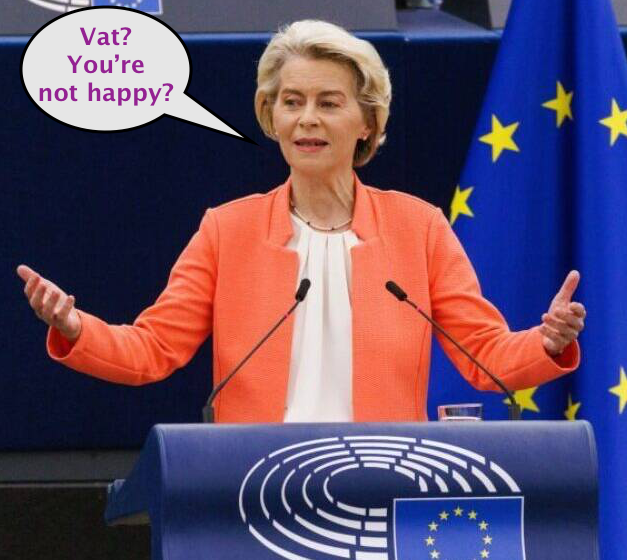


 Posts
Posts


